

26 Sep The real cost of self-managing a Los Angeles rental in 2026
The real cost of self-managing a Los Angeles rental in 2026
Self-management looks free because the fee is the only cost on a statement. Here is where the other costs hide in Los Angeles in 2026: vacancy, this year's rule changes, deposit photographs, old-building repairs and your time.
Self-management looks free because the management fee is the only cost that shows up as a line on a statement. The other costs never get a line of their own. They turn up as a month with no rent, a registration fee paid late, a deposit deduction a judge would not allow, or a Saturday spent under a sink. Here is where those costs hide in Los Angeles right now, using this year’s actual numbers.
A vacant month costs more than this year’s rent increase
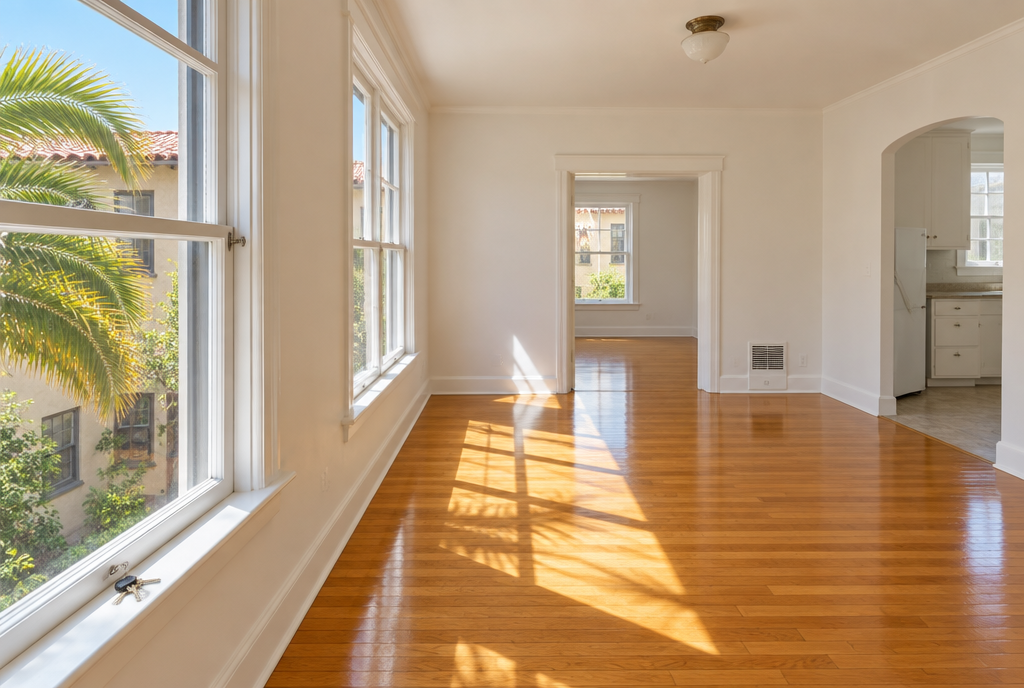
In Realtor.com’s August rental report, the median asking rent for studios through two-bedrooms in the Los Angeles–Long Beach–Anaheim metro was $2,785, down 1.6% from a year earlier. Of those listings, 39.3% offered a concession. That is a market in which a unit priced from last year’s number can sit.
The arithmetic of sitting is unkind. One empty month is one-twelfth of the year’s rent, or about 8.3%. For a unit under the city’s Rent Stabilization Ordinance, the allowable increase from July 1, 2026 through June 30, 2027 is 3%. That figure already reflects the city’s new formula, described below. A single vacant month therefore costs nearly three times what this year’s increase brings in.
Underpricing has a cost of its own, and in a rent-stabilized unit it is permanent. The rent set at move-in becomes the base that every later increase is calculated from. Price a unit $150 below the market to fill it quickly and the gap follows that tenancy for as long as it lasts. The right number comes from recent comparables of the same building type and the same bedroom and bathroom count, a few blocks away, not from a portal estimate.
The rules changed this year, and the fees and deadlines are yours

The Los Angeles City Council rewrote the Rent Stabilization Ordinance’s increase formula effective February 2, 2026. According to the Los Angeles Housing Department, the annual increase is now 90% of the average Consumer Price Index rather than 100%, with a floor of 1% and a cap of 4%. Under the old rules the floor was 3% and the cap was 8%. Other changes took effect the same day. The annual increase may no longer include an extra percentage for utilities. Adding a dependent to the household no longer allows a rent increase. Adding a tenant who is not a dependent still allows a 10% increase, but only if the owner gives notice within 60 days of learning about the new tenant, and the rent comes back down when that tenant leaves.
Units outside the ordinance follow a different cap. Under the state’s Tenant Protection Act, the Los Angeles County Department of Consumer and Business Affairs puts the maximum increase for the Los Angeles area at 8.7% from August 1, 2026. That is 5% plus the region’s 3.7% inflation figure.
Then there is the calendar. Each of these is a small cost that grows when it is missed.
- Annual registration. The fee is $38.75 per rent-stabilized unit, plus $67.94 per unit for the Systematic Code Enforcement Program. Units outside the ordinance pay $31.05 under the Just Cause Ordinance.
- Tenant surcharges. Owners may pass half of the registration and code enforcement fees to tenants as monthly surcharges of $1.61 and $2.83. Owners who never serve the notice to collect them simply absorb the cost.
- Rent increase notices. An increase of 10% or less needs 30 days’ written notice. An increase above 10% within twelve months needs 90 days.
- Right to counsel. Since August 20, 2025, owners must post the city’s Notice of Right to Counsel, give it to tenants at the start of a tenancy and attach it to any eviction notice.
- Filing termination notices. A notice terminating a rent-stabilized tenancy must be filed with the Housing Department within three business days of serving it.
None of these is difficult on its own. The cost comes from keeping all of them straight across every unit, every year, while the rules keep moving.
Your security deposit depends on photographs
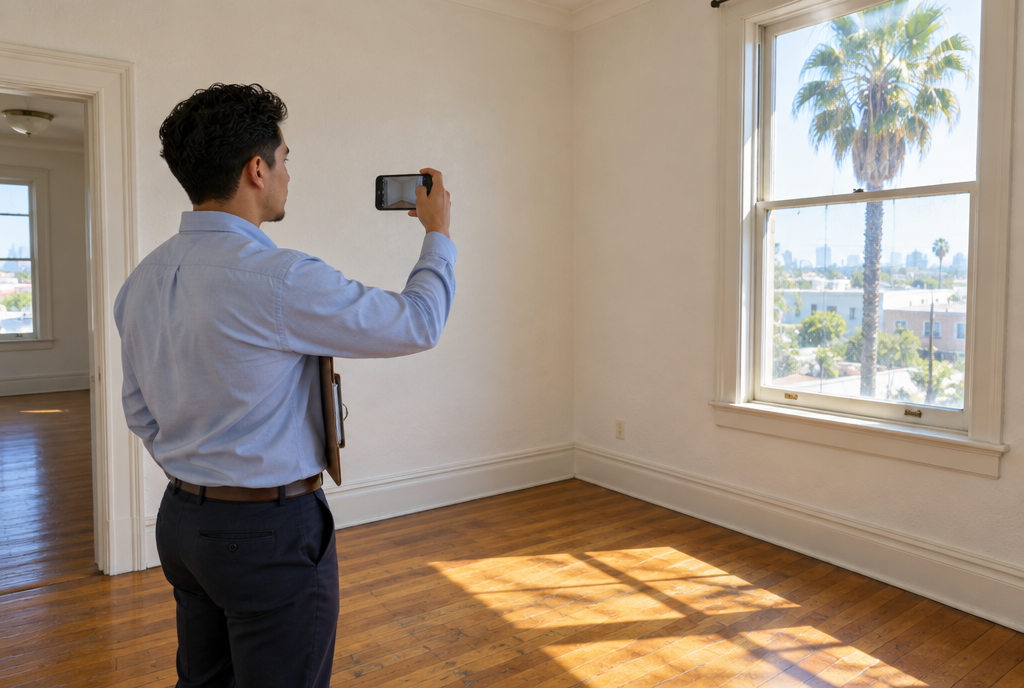
California’s deposit law, Civil Code section 1950.5, has tightened twice in two years. Since July 1, 2024, most landlords may collect no more than one month’s rent as a deposit. The exception is narrow. An owner who is a natural person, or a limited liability company whose members are all natural persons, and who owns no more than two rental properties with no more than four units between them may collect up to two months, except from a service member.
The second change is about evidence. Since April 1, 2025, a landlord who plans to deduct for repairs or cleaning must photograph the unit after the tenant moves out and before the work starts, then again once it is done. For tenancies that began on or after July 1, 2025, the landlord must also photograph the unit at move-in.
The deposit, with an itemized statement of any deductions, is due back within 21 days of move-out. A landlord who keeps a deposit in bad faith can owe up to twice its amount on top of actual damages. Without the photographs, a legitimate deduction becomes very hard to defend, and the only record left is the tenant’s word against yours.
Old buildings punish slow repairs
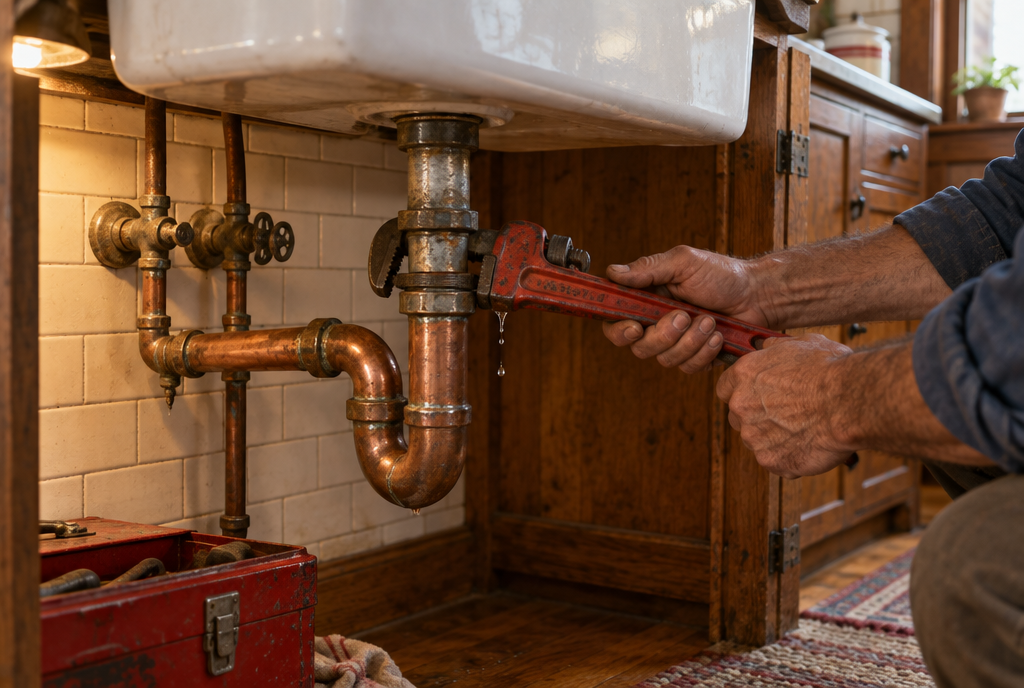
The Rent Stabilization Ordinance generally covers buildings first built on or before October 1, 1978, and many of them are generations older than that. In buildings that age, a slow drip under a sink is rarely only a drip. Left for a few weeks, it can reach the subfloor, the cabinet and the unit below. Owners who manage from a distance tend to learn about these problems late, because tenants report what they see and not what is happening inside the wall.
There is also a quieter cost in how large repairs are handled. The ordinance lets owners recover the cost of certain work through rent increases, but only through a cost recovery application approved by the Housing Department. For a primary renovation, such as replacing water and sewer piping or rewiring, the department must accept a Tenant Habitability Plan before the work begins. The paperwork has to come first, which is easy to miss when old pipes keep failing and a full re-pipe starts to feel urgent.
Put an honest price on your time
Count the hours in a normal year: showings and screening when a unit turns, the rent increase and surcharge notices, the registration, the repair calls, the move-in and move-out photographs, the deposit accounting and the tax records. Then add the weeks in which something goes wrong. Whatever your hourly value, that total is what self-management actually costs. It is rarely zero, and it tends to arrive at inconvenient times.
When managing your own rental still makes sense

To be fair to self-management, plenty of owners do it well. If you live nearby, own a unit or two, know which rules cover them, keep good records and enjoy the work, the numbers above may never catch up with you. Our earlier piece on six signs it may be time to hire a property manager describes what the tipping point tends to look like.
If you do hire help, check the license first. In California, renting property or collecting rent for someone else for pay is broker activity under Business and Professions Code section 10131, and every license can be looked up on the Department of Real Estate’s website.
If you would like to start with the first cost on this list, request a rental analysis below. We will tell you what your units should be renting for today, measured against comparables that genuinely match.
What should your building be earning?
A free rental analysis, with no obligation. We will tell you what the units should rent for, what is holding them back, and what we would do first. If you own in West Adams, our property management page sets out how we work.