
12 Oct The leak nobody hears: preventing water waste in Los Angeles rentals
The leak nobody hears: preventing water waste in Los Angeles rentals
Running toilets, broken sprinklers and the LADWP rules most people never hear about: who pays, who repairs, and what tenants should report, whether the water bill is in the owner's name or the tenant's.
There’s a sound every renter and every owner eventually learns to tune out: the faint hiss of a toilet that never quite stops filling. It’s quiet. It doesn’t drip on anything. Nobody’s floor gets wet. And it can quietly run up a water bill for months while everyone in the building assumes it’s someone else’s problem.
This post is for both sides of the lease. Whether the LADWP bill comes to you as the owner or to you as the tenant, small leaks cost real money, the city has rules about outdoor water waste, and the fix almost always starts with someone noticing and telling us. Here’s what to look for, how LADWP actually handles a big bill, and who’s on the hook for what.
The running toilet: the most expensive thing you can’t see
According to the EPA’s WaterSense program, the average household’s leaks waste more than 9,300 gallons a year, and nine percent of homes have leaks wasting 50 gallons or more every day. A toilet that runs constantly can waste 200 gallons or more a day all by itself.
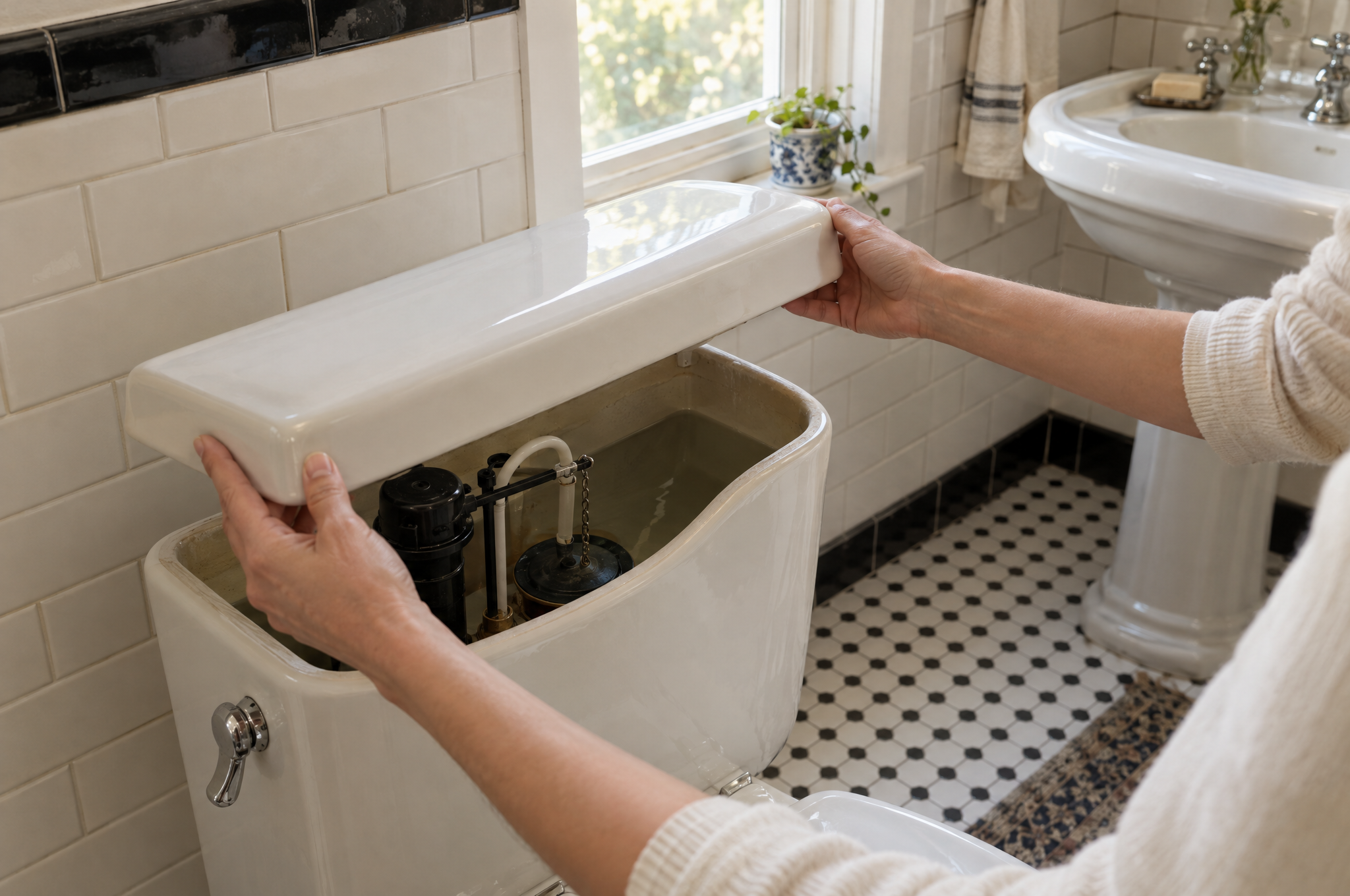
The usual culprit is the flapper, the rubber seal at the bottom of the tank. Over time it warps, stiffens or gets a chain caught under it, and water slips past it into the bowl. The tank refills to make up the difference, over and over, all day and all night.
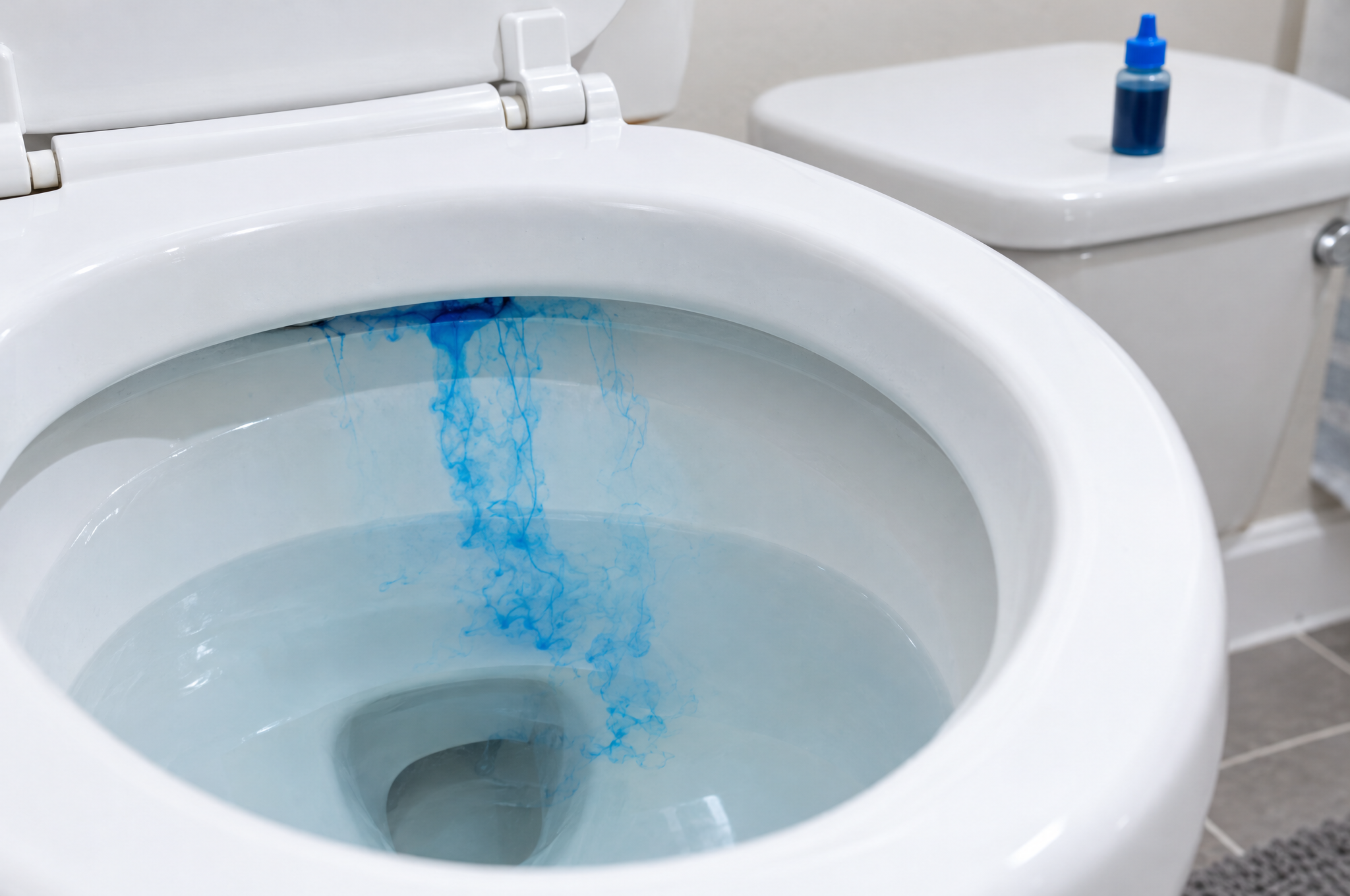
You don’t need a plumber to check. You need food coloring and ten minutes:
- Lift the tank lid and set it somewhere safe. Those lids are heavy and they crack.
- Add a few drops of food coloring to the water in the tank. Don’t flush.
- Wait about ten minutes.
- Look in the bowl. If color has crept in, the flapper is leaking.
- Flush when you’re done so the dye doesn’t stain.
Sometimes the flapper just didn’t seat after the last flush and a gentle press fixes it. If it keeps happening, it needs replacing. Tenants, that’s our job: send us a note and we’ll handle it. Owners, it’s a cheap part, but it’s worth having someone look at the whole fill valve while they’re in there.
Here’s the part most people don’t know: LADWP won’t forgive a toilet leak
A lot of people assume that if a leak blows up the bill, they can call the utility, explain, and get a credit. With LADWP, that’s mostly not true.
LADWP does offer a billing adjustment for leak repairs, but only for an underground leak on the property that has already been repaired. Their own page is blunt about the rest: broken or leaking sprinklers, water heaters, faucets, toilets, and pool equipment or pool leaks do not qualify. If the water went down a toilet, the water was used, and the bill stands.
For the leaks that do qualify, the rules are worth knowing:
- You have to request it within 12 months of the leak.
- LADWP honors one underground leak request every 24 months.
- You submit their Underground Leak Adjustment Request Form, or mail the details to the Field Investigations office, with copies of the repair receipts. They don’t accept these by email.
- Expect at least four to six weeks before the Field Investigation Unit gets back to you. The amount of any adjustment is up to them.

If the bill looks wrong rather than just high, that’s a different conversation. LADWP’s Customer Bill of Rights says bills that run more than three times the average for the same billing period are reviewed automatically, and if the cause was a bad meter reading, they’ll correct the bill and add a $25 credit. Many LADWP customers are billed every other month, so a leak that starts the day after a reading can run for close to two months before anyone sees a number. You can reach them at 1-800-DIAL-DWP (1-800-342-5397).
The takeaway is simple. The utility isn’t going to catch a running toilet for you, and it isn’t going to pay for one. The only real protection is catching it early.
Flume: a smoke detector for your water
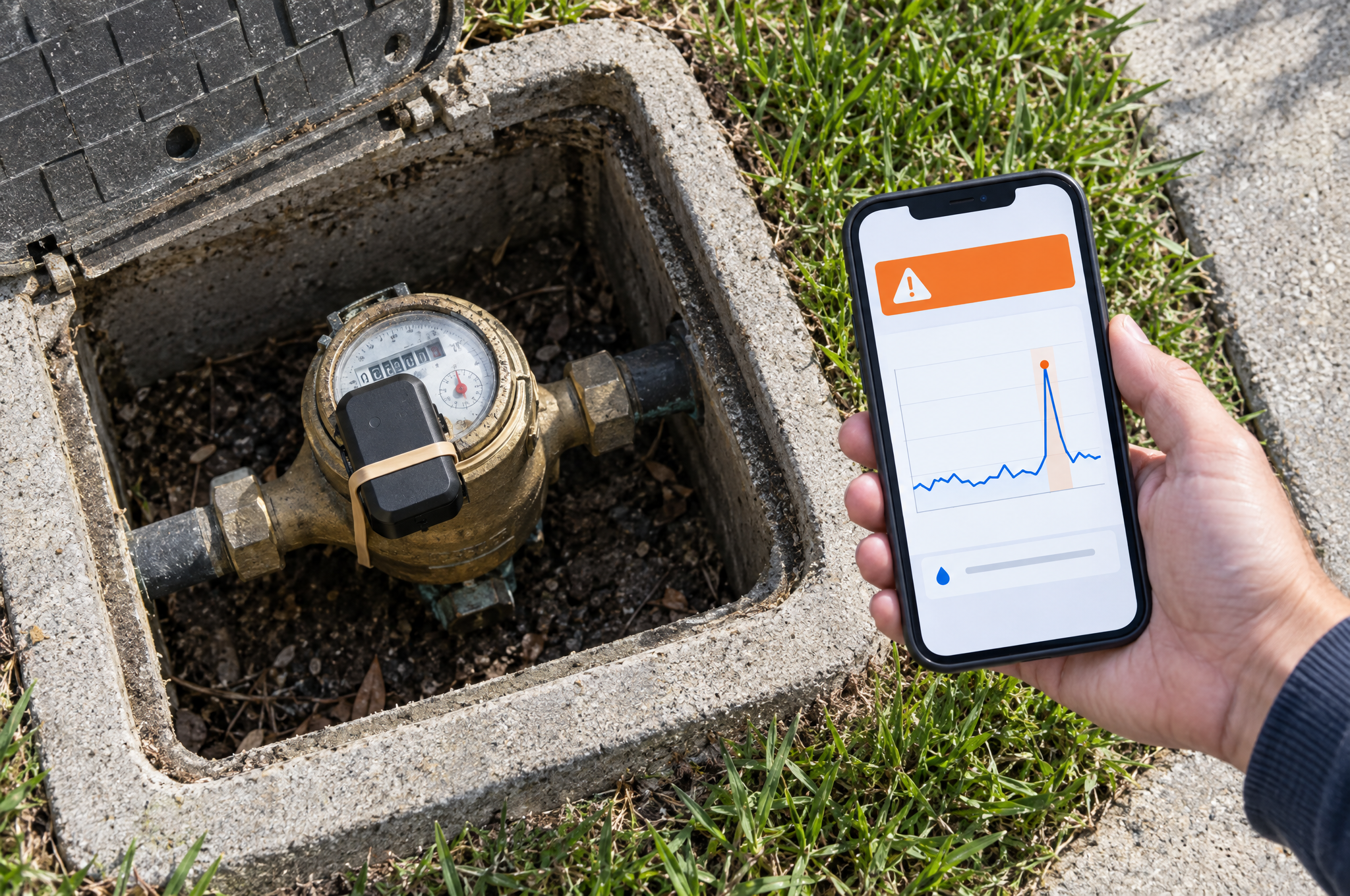
The single best tool we know of for catching leaks early is the Flume Smart Water Monitor. It’s a small sensor that straps onto the outside of the water meter, with no plumbing work. It reads the meter in real time and sends an alert to your phone when water is running that shouldn’t be: at 3 a.m., for hours on end, or at a rate that doesn’t look like a shower. A running toilet that would’ve shown up on a bill seven weeks later shows up on your phone the same day.
LADWP has a customer program for Flume, and the timing right now is good:
- Through October 25, 2026, eligible LADWP customers can get the monitor free (it retails for $249). Shipping and tax aren’t included.
- Outside that window, it’s $24 after the LADWP discount, plus shipping and tax.
- The program is for LADWP customers in single-family residences, and it has to be ordered through Flume’s LADWP page at flumewater.com/ladwp.
If you own a single-family rental, this is close to a no-brainer, and we’re happy to help get one installed. If the LADWP account is in your tenant’s name, the order runs through their account, so let’s talk about it together. Owners of small multifamily buildings aren’t covered by the discount, but the device itself still works on a building meter, and for a master-metered building it may be the only early warning you’ll get.
Sprinklers, runoff and the city’s water rules
Indoor leaks cost money. Outdoor waste can cost money and draw a citation. Los Angeles is currently in Phase 2 of its Water Conservation Ordinance, and the rules apply to every property, rented or not:
- Watering days depend on your address. Odd-numbered addresses water Monday, Wednesday and Friday. Even-numbered addresses water Sunday, Tuesday and Thursday.
- No outdoor watering between 9 a.m. and 4 p.m.
- Short cycles. Standard sprinklers get one cycle of up to 8 minutes per station per watering day. Water-conserving nozzles get two 15-minute cycles.
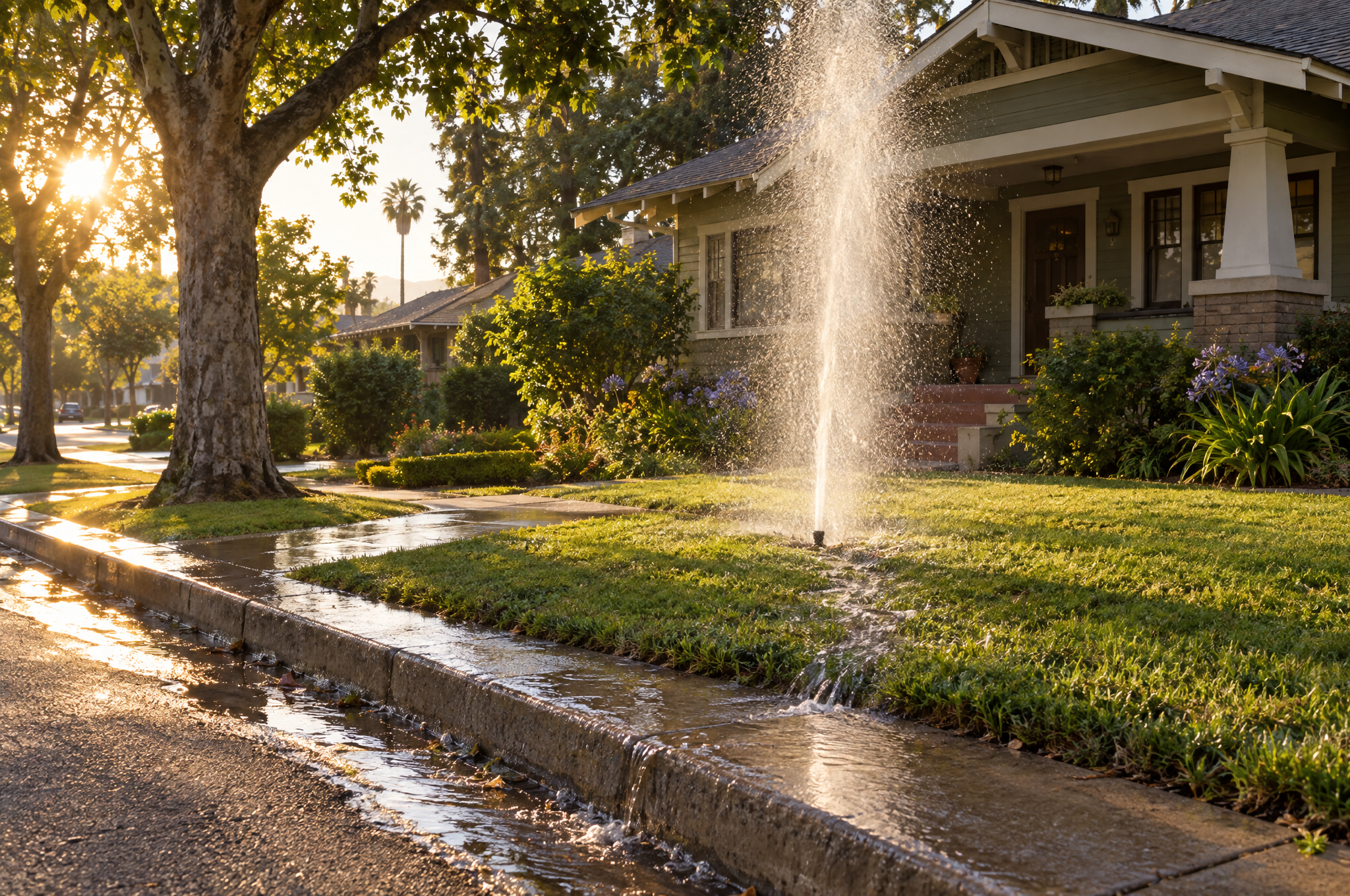
- No runoff onto streets, driveways or gutters, and no hosing down sidewalks, driveways or patios.
- Hoses need a self-closing shutoff nozzle to wash a car.
- Leaks have to be repaired in a timely manner.
For a typical residential meter, the first violation is a written warning. After that the fines are $100, $200 and $300, and a fifth violation can mean LADWP restricts the water flow to the property. Those notices go to the property and the account, not to whoever happened to notice the broken head and walk past it.
A snapped sprinkler head is a classic example. It runs for eight minutes before sunrise, three days a week, while everyone’s asleep. Nobody sees the geyser. A neighbor sees the river in the gutter. If you’re a tenant and you spot one, a quick photo to us is worth a lot. And yes, anyone can report water waste to the city: 1-800-DIAL-DWP, the Water Conservation Response Unit at 800-544-4498, LADWP’s online water waste report, or MyLA311. We’d much rather hear about it from you first.
What this means for you
If the owner pays for water
This is how most multifamily buildings in Los Angeles work: one meter for the building, and the bill goes to the owner. The waste lands on the owner’s bill, so it can feel to a tenant like it’s not their concern. It still is. A leak inside your unit is something only you can see, and in older buildings a drip under a sink rarely stays just a drip. It finds the cabinet, the subfloor and sometimes the ceiling of the unit below.
Repairs are the owner’s responsibility. Tell us about the leak and we’ll take care of it.
If the tenant pays for water
In many single-family homes and duplexes with separate meters, the LADWP account is in the tenant’s name. Then a running toilet is coming straight out of your pocket, which is a good reason to do the dye test today.
But paying the bill doesn’t make you the plumber. The owner is still generally responsible for keeping the plumbing in working order, so a worn-out flapper, a leaking water heater or a cracked supply line is something to report to us, not something you have to fix yourself. The exception is damage someone in the household causes, like a hose left running overnight. California law (Civil Code section 1941.2) puts that on the tenant.
If you do get hit with a big bill from an underground leak, the repair receipts become your evidence for the LADWP adjustment. Let us know and we’ll get you copies.
Either way: tell us
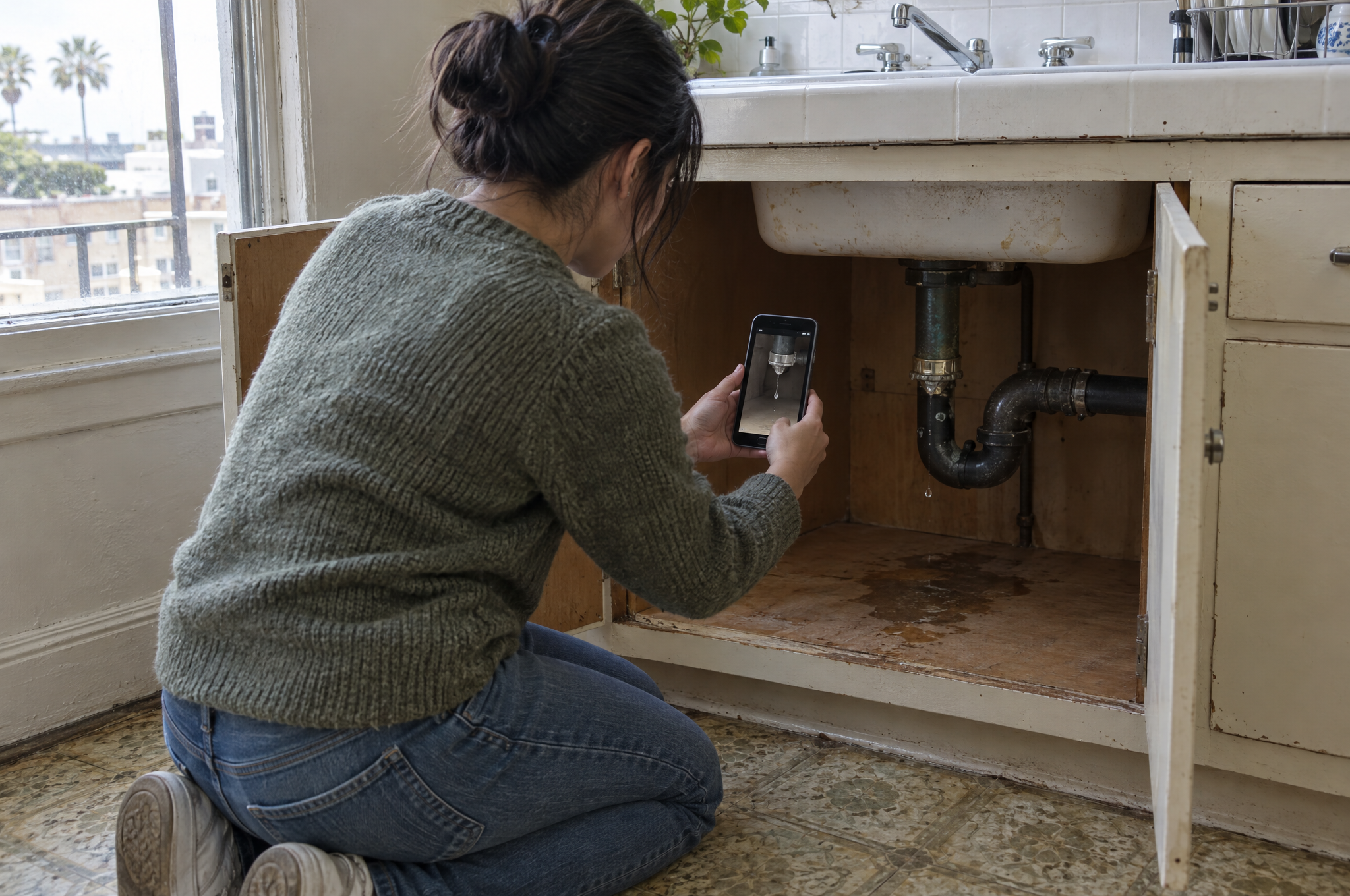
No matter whose name is on the bill, tenants have a responsibility to report leaks and water problems to management promptly, and owners need to act on them. A two-line message with a photo is perfect. Here’s what’s worth reporting:
- A toilet that runs, hisses, refills on its own or fails the dye test
- A faucet or showerhead that drips after it’s turned off. One drip a second adds up to more than 3,000 gallons a year.
- Water under a sink, around the base of a toilet, or near the water heater
- A water heater relief pipe that drips or a tank that’s sweating or rusting
- Damp spots, warped flooring, bubbling paint or a musty smell
- A warm spot on the floor, or the sound of running water when nothing is on (this can be a leak under the slab)
- Broken or tilted sprinkler heads, soggy patches of lawn, or water running into the street
- A dripping outdoor spigot or a hose that won’t fully shut off
- A water bill that jumps for no obvious reason, if the account is yours
Tell us where it is, roughly when you noticed it, and send a photo or a short video if you can. Fixing a leak almost always costs less than ignoring it, and so does a water bill.
For owners: let LADWP help pay for the upgrades
If you’re replacing old fixtures or irrigation anyway, LADWP’s SoCal Water$mart rebates can cover a meaningful share. For residential properties of one to four units, the current listings include $250 per high-efficiency toilet (replacing one rated 1.6 gallons per flush or more with one rated 1.1 or less), up to $200 per weather-based irrigation controller, up to $6 per rotating sprinkler nozzle (minimum 15), and $5 per square foot for turf replacement with pre-approval. Buildings with five or more units go through the commercial and multifamily program, where the toilet rebate is $300. Terms change, so check the current listing before you buy. Turf rebates in particular require approval before any work starts.
A weather-based controller is one of the smartest of these for a rental. It skips watering after rain on its own and keeps the schedule within the city’s rules, so nobody has to remember. Pair it with a Flume on the meter and most of the leaks in this post would show up on someone’s phone long before they showed up on a bill.
If you’d like us to look over a property’s water setup, including fixtures, irrigation and meter, or if you’re a tenant who’s just found something on this list, reach out. That’s exactly the kind of call we want to get.
What should your building be earning?
A free rental analysis, with no obligation. We will tell you what the units should rent for, what is holding them back, and what we would do first. If you own in West Adams, our property management page sets out how we work.